
DHI vs FUE Hair Transplant: Which One is the Ultimate Choice for You?
The world of hair restoration has evolved at a staggering pace. Not too long ago, the only way to restore hair was through invasive procedures that left noticeable scars. Fast forward to 2026, and we now have highly sophisticated, minimally invasive options that offer incredibly natural results. However, with progress comes a difficult choice for the patient. The most common dilemma faced by anyone starting this journey is the debate of dhi vs fue hair transplant.
While both methods fall under the umbrella of modern hair restoration, they differ significantly in their application, tools, and the final aesthetic outcome. In this 1,000-word deep dive, we will break down the mechanics of both techniques, compare their pros and cons, and help you determine which approach aligns best with your hair goals and lifestyle.
1. Understanding the Foundations: What is FUE?
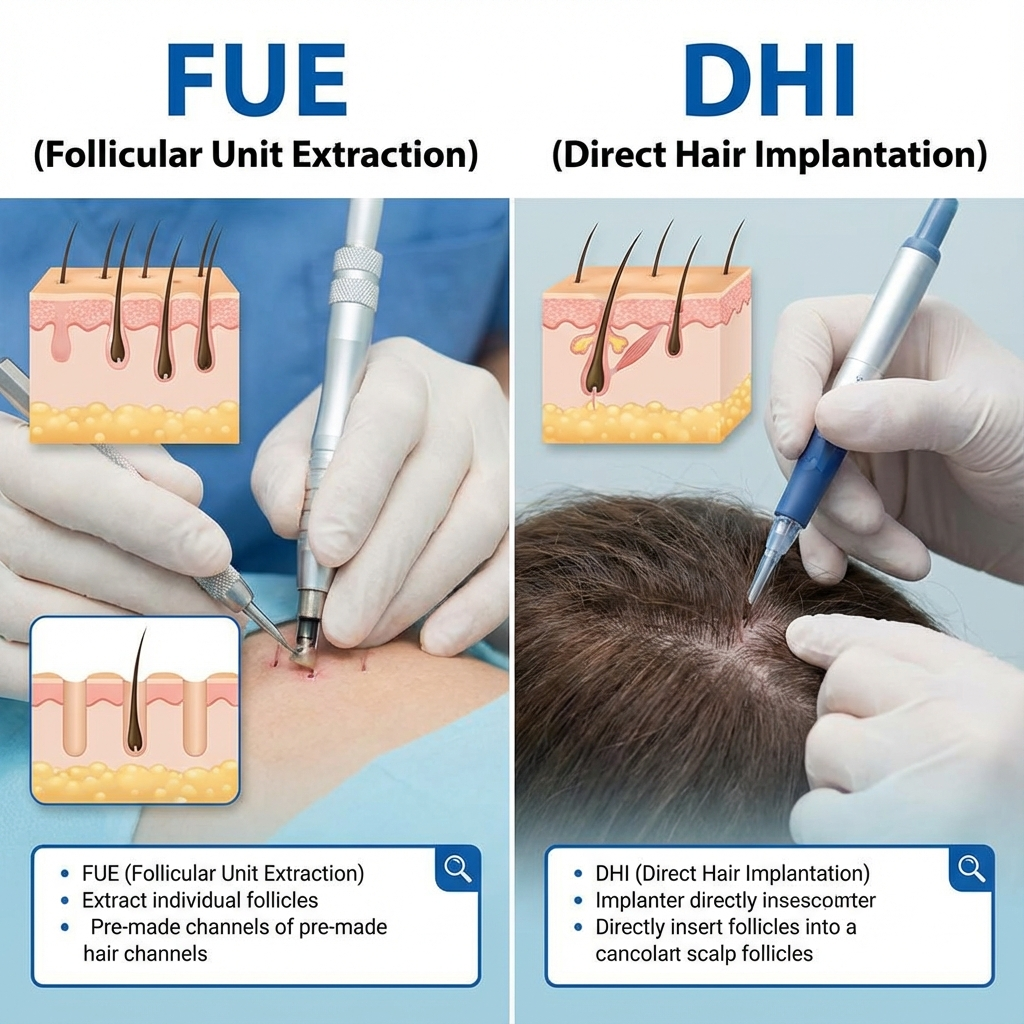
FUE, or Follicular Unit Extraction, revolutionized the industry by moving away from the “strip” method (FUT). In an FUE procedure, a surgeon extracts individual hair follicles from the donor area (usually the back of the head) using a micro-motor tool.
Once the follicles are extracted, the surgeon performs what is known as “channel opening.” This involves using a blade or a sapphire needle to create thousands of tiny incisions in the balding area. Finally, the extracted follicles are manually placed into these channels using forceps. FUE is known for its versatility and its ability to cover large areas of baldness in a single session.
2. Understanding the Innovation: What is DHI?
DHI, or Direct Hair Implantation, is essentially a specialized evolution of the FUE technique. The extraction phase is nearly identical; however, the implantation phase is where the “dhi vs fue hair transplant” debate really begins.
In DHI, the surgeon uses a specialized tool called a Choi Implanter Pen. This pen allows the surgeon to load a follicle and implant it directly into the scalp without the need to pre-cut channels. By combining the channel opening and implantation into one single motion, the procedure offers a level of precision that was previously unattainable. Because the follicles spend less time outside the body, they often have a higher survival rate.
3. The Technical Comparison: Step-by-Step
To truly understand the dhi vs fue hair transplant choice, we need to look at how the surgical day differs for the patient.
- Preparation: In a standard FUE procedure, the entire scalp is usually shaved to allow for easy extraction and channel opening. In DHI, “unshaven” transplants are much more common, as the Choi pen can navigate between existing long hairs more effectively.
- Implantation Tool: FUE relies on manual placement with forceps into pre-cut slits. DHI uses the Choi pen, which controls the depth, angle, and direction of every single hair in one click.
- Graft Handling: In FUE, follicles are often handled multiple times before they are settled. In DHI, the contact with the follicle is minimized, which protects the delicate bulb of the hair.
4. Aesthetic Results: Density and Naturalness
When patients compare dhi vs fue hair transplant, the primary concern is almost always the final look.
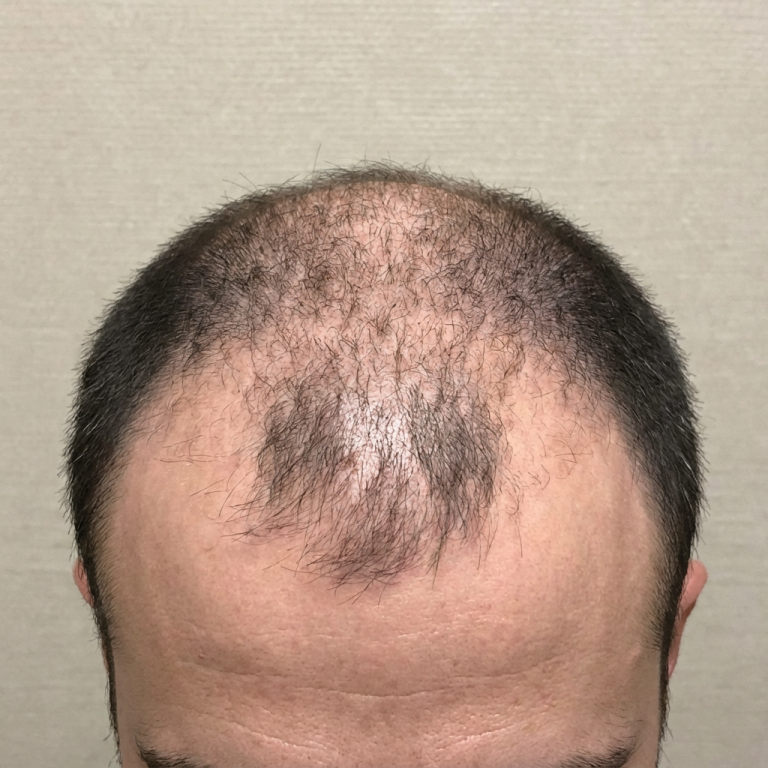
FUE is excellent for creating “global coverage.” If you have a very large area of baldness, FUE allows the surgeon to distribute a high volume of grafts quickly. However, because the channels are opened manually, it can sometimes be difficult to achieve the same ultra-high density that DHI offers.
DHI is often considered the “artistic” choice. Because the Choi pen is so thin, grafts can be placed much closer together. This makes DHI the superior choice for lowering a hairline or filling in thinning areas where you want the highest possible density. The 360-degree control over the angle also ensures that the new hair follows the natural growth pattern of your existing hair perfectly.
5. Recovery and Downtime
In the modern world, recovery time is a major factor. In the dhi vs fue hair transplant comparison, DHI generally takes the lead for those who need to get back to work quickly.
Since DHI does not require large incisions or “pre-opening” of the scalp, there is significantly less bleeding and trauma. Most DHI patients find that their scabs heal faster and the redness subsides within 3 to 5 days. FUE recovery is also fast, but because of the manual channel opening, there is often slightly more swelling and a longer period (7 to 10 days) before the scalp looks “normal” again.
6. The Cost Factor: Why is DHI More Expensive?
It is no secret that a DHI procedure usually comes with a higher price tag than FUE. When evaluating dhi vs fue hair transplant costs, you aren’t just paying for a tool; you are paying for a larger medical team and a longer surgical time.
In a DHI session, several technicians are required to constantly load the Choi pens while the surgeon implants them. The process is much more labor-intensive and requires a higher level of specialized training. For many, the extra cost is worth it for the benefit of not having to shave their head and the increased graft survival rate.
7. Using AI Simulation to Make the Choice
In 2026, you don’t have to guess which method will work better for you. Before you decide on dhi vs fue hair transplant, you should utilize hair transplant simulation software.
By uploading photos of your current hair, the AI can show you a 3D model of what an FUE result (focused on coverage) would look like versus a DHI result (focused on density). This takes the emotional stress out of the decision-making process and allows you to choose based on visual data and realistic expectations.
8. Summary: Which One Should You Choose?
So, where do we land on the dhi vs fue hair transplant debate? There is no “one size fits all” answer, but here are the general guidelines:
Choose FUE if:
- You have a large area of baldness to cover (Grade 5 or 6 on the Norwood scale).
- You are looking for a more budget-friendly option.
- You don’t mind shaving your head for the procedure.
Choose DHI if:
- You want to fill in thinning areas with maximum density.
- You prefer a “no-shave” or “long hair” transplant.
- You want the absolute fastest recovery time possible.
- You are focusing on a very natural, high-precision hairline.
9. Conclusion: The Path Forward
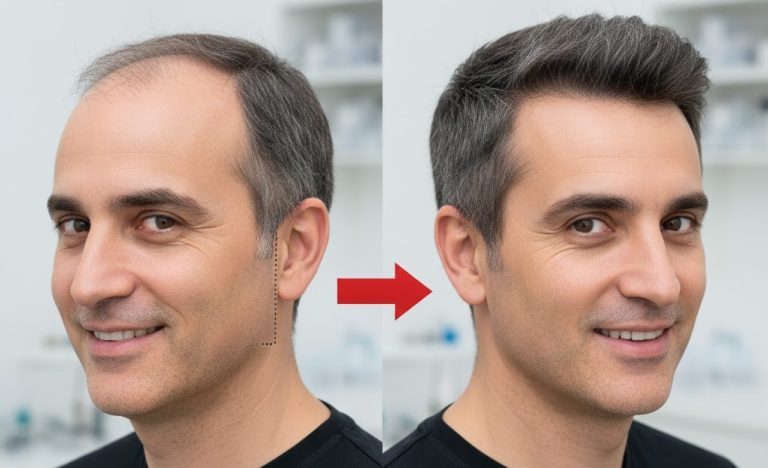
Both FUE and DHI are incredible medical achievements that have helped millions of men and women regain their confidence. The “best” method is the one that fits your specific degree of hair loss and your personal expectations. Whether you choose the wide coverage of FUE or the surgical precision of DHI, the most important step is choosing a clinic that understands the artistry behind the science.
The battle against hair loss is no longer a losing one. With the right technique and a clear plan, you can achieve a look that is not just a “fix,” but a total transformation.