
The Epigenetic Clock: New Frontiers in Understanding Pattern Hair Loss
As we move deeper into 2026, the medical community’s perspective on hair thinning has undergone a radical transformation. No longer is androgenetic alopecia viewed simply as an unfortunate genetic inheritance. Instead, it is now understood as a complex interplay between a person’s DNA and their environment—a field known as epigenetics. This shift in understanding has opened new doors for treating pattern hair loss, allowing clinicians to look beyond hormones and target the very signaling pathways that tell a hair follicle to stop growing.
In this comprehensive analysis, we will explore the “Follicular Niche” theory, the impact of oxidative stress on hair health, and the revolutionary 2026 protocols that are changing the way we fight pattern hair loss across the globe.
1. The Follicular Niche and the “Sinking” Hair Root
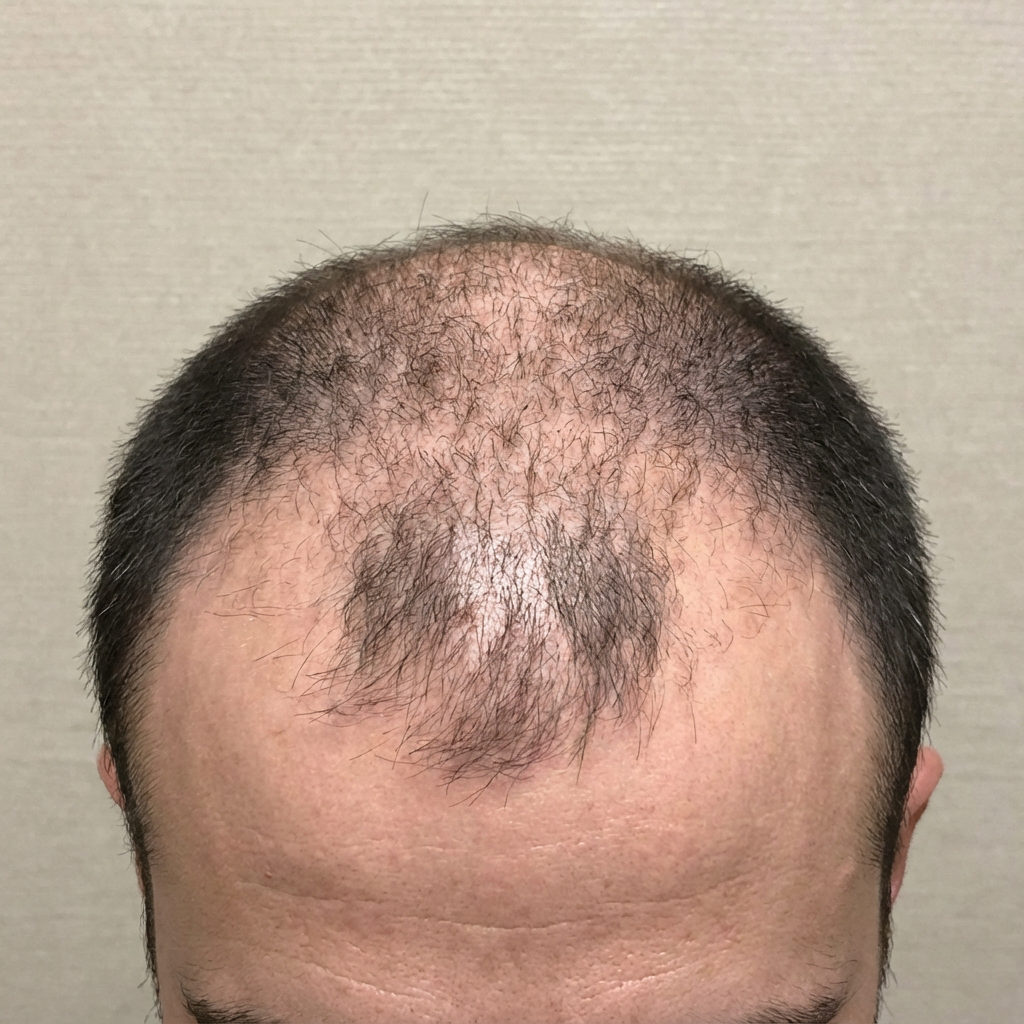
To understand the progression of pattern hair loss, one must look at the hair follicle as its own ecosystem, often called the “follicular niche.” In a healthy scalp, the dermal papilla, the bulge stem cells, and the surrounding blood vessels work in perfect harmony. However, in cases of androgenetic alopecia, this niche begins to collapse.
Research in 2026 has shown that as follicles miniaturize, they actually “sink” deeper into the dermis, losing their connection to the vital capillary networks that provide oxygen and nutrients. This structural detachment is a major driver of pattern hair loss. Modern treatments now focus on “vascular recruitment,” using peptides and low-level laser therapy (LLLT) to force the scalp to build new blood vessels around the struggling follicles, essentially re-anchoring them to their life-support system.
2. Epigenetics: Why Your DNA Isn’t Your Destiny
The most exciting development in 2026 is the realization that while you may have the “genes” for pattern hair loss, those genes can be “turned off” or “turned on” by external factors. This is the essence of epigenetics. Factors such as chronic stress, diet, and exposure to pollutants (particulate matter 2.5) cause chemical changes to our DNA—specifically DNA methylation.
These epigenetic changes can accelerate the onset of pattern hair loss by silencing the genes responsible for hair growth signaling (like the Wnt pathway). In response, the 2026 market has seen the rise of “Epigenetic Hair Serums.” These formulas contain methyltransferase inhibitors that attempt to reverse these chemical “off-switches,” allowing the hair follicle to return to its original growth program regardless of the patient’s age.
3. Oxidative Stress and the “Zombie Cell” Theory
A breakthrough paper published in early 2026 introduced the “Senescence-Associated Secretory Phenotype” (SASP) as a key player in pattern hair loss. When hair follicles are exposed to prolonged oxidative stress—from UV rays or internal metabolic waste—they can enter a state of “senescence.”
These are often called “zombie cells.” They don’t die, but they stop functioning and start secreting inflammatory proteins that damage the healthy follicles around them. This explains why pattern hair loss often starts in one small area and spreads outward in a wave-like pattern. Current 2026 protocols now use “Senolytics”—topical agents designed to selectively clear out these zombie cells—giving the remaining healthy follicles the room they need to thrive and produce thick, terminal hair.
4. The Autophagy Switch: Cleaning the Follicle from Within
Autophagy is the body’s way of “cleaning house” at a cellular level, breaking down damaged components to make room for new growth. In 2026, we have discovered that the follicles of people suffering from pattern hair loss have a suppressed autophagy response. Essentially, the “cellular trash” is building up inside the hair root, preventing it from entering the anagen phase.
New treatments are targeting a protein called mTOR to trigger the “autophagy switch.” By encouraging the hair follicle to clean itself from within, we can restore its metabolic efficiency. This internal cleansing is often the missing piece of the puzzle for patients who find that standard pattern hair loss medications have stopped working after a few years of use.
5. DHI Nano-Implantation: The Aesthetic Standard
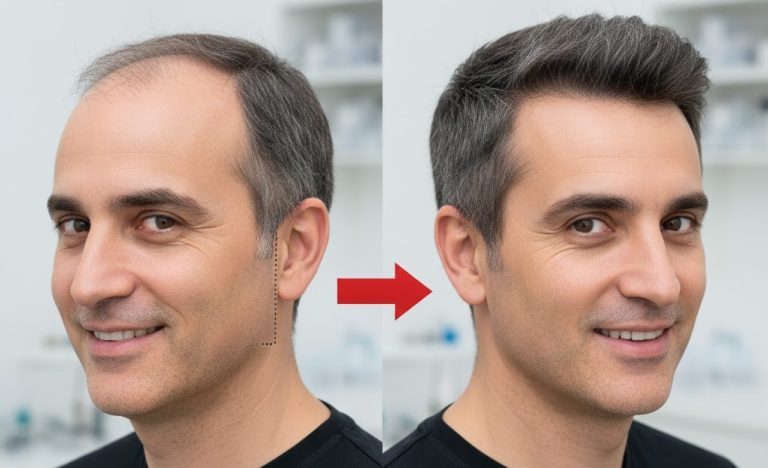
When non-surgical methods are no longer sufficient, surgery remains the gold standard for restoration. In 2026, the surgical treatment of pattern hair loss has reached a level of “Nano-Precision.” Using DHI (Direct Hair Implantation) techniques with needles as thin as 0.6mm, surgeons can now achieve “Ultra-Density.”
The goal in 2026 is not just to “cover” the bald spot, but to replicate the natural “clumping” of hair. By studying the patient’s original hair grouping (follicular units of 1, 2, or 3 hairs), AI-assisted tools help the surgeon replicate the exact texture of the surrounding native hair. This ensures that even in the most severe cases of pattern hair loss, the results are indistinguishable from a natural, non-transplanted head of hair.
6. Scalp Skinification: Treating the Soil, Not Just the Plant
A major trend in 2026 is “Scalp Skinification.” This is the realization that the scalp is simply an extension of our facial skin, yet it is often neglected. A dry, inflamed, or oily scalp can significantly exacerbate pattern hair loss by clogging the follicular ostia (the opening where hair emerges).
The 2026 “Skinification” routine involves:
- AHA/BHA Chemical Peels: To remove dead skin cells and “bio-film” buildup.
- Hyaluronic Acid Serums: To maintain the hydration of the dermal matrix.
- Probiotic Scalp Masks: To balance the microbiome and prevent the growth of Malassezia, which is linked to follicular inflammation. By treating the “soil” with the same care as our faces, we ensure that treatments for pattern hair loss can penetrate deeper and work more effectively.
7. Female Pattern Hair Loss: The Estrogen-Androgen Ratio
While we often focus on male hormones, pattern hair loss in women is a distinct clinical challenge. In 2026, we understand that it isn’t just about high androgens, but the ratio of estrogen to androgens. As women age or experience hormonal shifts (such as postpartum or menopause), their estrogen levels drop, leaving the follicles unprotected from even normal levels of DHT.
The 2026 approach for women includes “Bio-Identical Hormone Replacement” and topical “Phyto-Estrogens.” These plant-based estrogens bind to the receptors in the hair follicle, acting as a “shield” against the miniaturizing effects of DHT. This targeted, female-centric strategy has made pattern hair loss in women much easier to manage than in previous decades.
8. Precision Nutrition: The Role of the Gut-Hair Axis
We are what we eat, and in 2026, the “Gut-Hair Axis” is a major area of study. Research has shown that an imbalanced gut microbiome (dysbiosis) can trigger systemic inflammation that directly impacts pattern hair loss.
Modern treatment plans now include “Nutrigenomic” testing. This allows doctors to prescribe specific diets and probiotics that reduce internal inflammation. For example, some patients may lack a specific gut bacterium that helps process biotin. By fixing the gut, we fix the supply chain of nutrients to the scalp, creating a more resilient environment against the effects of pattern hair loss.
9. The Digital Trichogram: Monitoring Success in Real-Time
In 2026, “Wait and see” is no longer the standard for monitoring treatment success. Patients now use “Home Digital Trichograms”—high-definition cameras that attach to a smartphone. These devices use AI to count hair density, measure shaft diameter, and track growth rates in real-time.
This data is shared with the patient’s doctor via a cloud-based app. If a treatment for pattern hair loss isn’t showing measurable results by month three, the protocol can be adjusted immediately. This “Rapid Feedback Loop” has significantly increased the success rates of medical hair restoration, as it prevents patients from wasting time on ineffective treatments.
10. Conclusion: Reclaiming the Narrative of Hair Health
As we look at the landscape of 2026, the battle against pattern hair loss is being won on multiple fronts. We are no longer just fighting against “bad luck” or “old age.” We are using the most advanced tools of molecular biology, epigenetics, and surgical engineering to rewrite the story of our hair.
Whether it’s through the selective clearing of “zombie cells,” the metabolic activation of stem cells, or the artistic precision of Nano-DHI, the solutions for pattern hair loss are more powerful and personalized than ever before. The future of hair health is one where we don’t just accept hair loss; we master the biological switches that control it. By staying ahead of the curve with a scientifically validated routine, every individual can maintain their density, their style, and their confidence for a lifetime.