
The 2026 High-Fidelity Era: A Comprehensive Clinical Analysis of Modern Hair Restoration
As we navigate the fiscal and clinical landscape of 2026, the definition of success in aesthetic medicine has been fundamentally rewritten. We have officially moved past the “transplant-only” era and entered the age of “High-Fidelity” hair restoration. In this new paradigm, the objective is no longer merely to move follicles from one location to another; it is to recreate the complex, multi-layered biological environment of a healthy scalp. Today, surgeons and researchers leverage a synergistic combination of Artificial Intelligence, regenerative molecules like exosomes, and advanced robotic precision to deliver results that are indistinguishable from nature.
For the modern patient—whether a high-performing athlete, a corporate executive, or an individual seeking to reclaim their identity—hair restoration in 2026 represents a peak intersection of medical science and artistic mastery. This article provides a 360-degree review of the technologies, biological protocols, and ethical standards that define the current gold standard in the field.
1. The Shift to Biometric Hairline Design
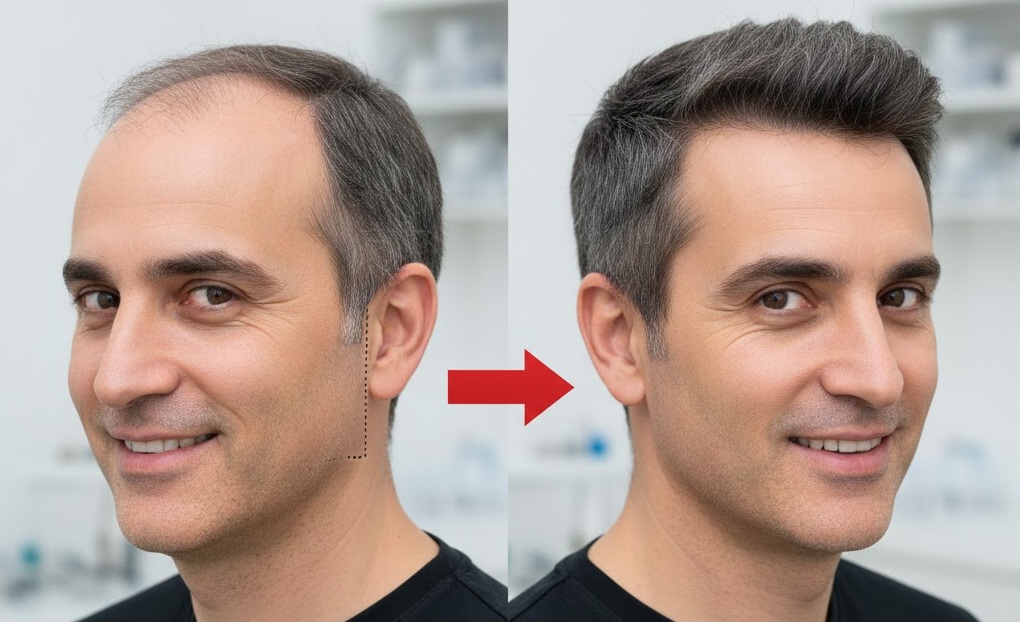
One of the most transformative advancements in 2026 is the move away from generic, “straight-line” hairlines. Modern hair restoration now utilizes “Biometric AI Result Simulation.” Before a single incision is made, surgeons use 50x magnification AI cameras and 3D imaging to map the patient’s unique facial symmetry, bone structure, and muscle movement.
This biometric approach allows for “Micro-Irregularity Design.” In nature, no hairline is perfectly symmetrical. By using algorithms to suggest “randomized” placement patterns for single-hair follicles in the transition zone, surgeons can create a “soft” entry point that mimics a natural juvenile or mature hairline perfectly. This level of planning ensures that even under the scrutiny of 8K macro photography, the results of the hair restoration remain undetectable.
2. Regenerative “Fertilization”: The Role of Exosomes and Polynucleotides
In 2026, we no longer view the scalp as a static canvas. Instead, we treat it as a biological soil that must be “fertilized” before surgery. The rise of regenerative medicine has introduced two key players: Exosomes and Polynucleotides.
- Exosomes: These nano-sized signaling vesicles derived from mesenchymal stem cells are the “messengers” of the cellular world. When applied during a hair restoration procedure, they deliver growth factors and mRNA directly to the hair bulbs. This reduces post-operative inflammation by up to 60% and “wakes up” dormant native follicles, resulting in a synergistic increase in overall density.
- Polynucleotides: These are natural polymers that aid in DNA repair and tissue regeneration. In 2026, they are often used in “Hybrid Protocols” alongside surgery to hydrate the scalp and create a healthy environment for the newly implanted grafts to thrive.
3. Stealth FUE: Absolute Discretion for the Professional
The “Ugly Duckling” phase—the period of redness and shaved patches following surgery—has historically been the biggest deterrent for patients. In 2026, the “Stealth” Procedure (No-Shave FUE) has solved this. This advanced form of hair restoration allows the surgeon to extract and implant follicles without shaving the donor or recipient areas.
This “power move” in modern trichology is particularly favored by public figures. Because the extraction points are hidden within the existing long hair, patients can walk out of the clinic and return to social or professional duties within 48 to 72 hours. The ability to undergo a high-density hair restoration without anyone being the wiser has democratized the procedure for those in the public eye.
[Table: 2026 Technique Comparison: Discretion vs. Volume]
| Technique | Shaving Required? | Ideal Candidate | 2026 Success Rate |
| Robotic FUEsion X | Partial (Donor) | High-volume cases (3,000+ grafts) | 99% Graft Survival |
| Nano-DHI | No | High-density hairline work | 98% Undetectability |
| Stealth FUE | No | Executives / Public Figures | 97% Immediate Discretion |
4. Man Aided by Machine: The Reality of AI-Robotics
The integration of AI-driven robotics has virtually eliminated human error in graft harvesting. In 2026, systems like the FUEsion X use real-time “Smart Magnification” to identify and select only the healthiest, most robust “multi-hair” units.
By avoiding “transection” (accidentally damaging the hair bulb during extraction), robotic systems have pushed graft survival rates to nearly 100%. Furthermore, AI Implantation Tools now calculate the optimal density for each zone—the hairline, the mid-scalp, and the crown—suggesting the specific graft types needed for each area. This data-driven approach ensures that the limited “donor bank” of the patient is managed with maximum efficiency, a critical component of lifelong hair restoration planning.
5. The “Donor Management” Crisis and Ethical Standards
As hair restoration becomes more accessible, a new challenge has emerged in 2026: “Donor Over-harvesting.” Many low-quality clinics in previous years exhausted patients’ donor areas in a single session, leaving them with no options for the future.
The 2026 ethical standard, supported by the ISHRS, mandates a “Donor Conservation Strategy.” Every procedure now begins with a digital mapping of the “finite bank account” of the donor site. Surgeons are required to leave enough hair for at least two future procedures, acknowledging that androgenetic alopecia is a progressive condition. This sustainable approach ensures that a hair restoration performed today will still look natural and balanced when the patient is in their 70s or 80s.
[Image: Digital mapping of the safe donor zone vs. the permanent zone in 2026]
6. Non-Surgical Breakthroughs: Targeted Molecules and JAK Inhibitors
For many patients, the journey to hair restoration begins with non-surgical intervention. 2026 has seen the FDA and EMA approval of several “next-generation” topicals:
- Clascoterone (Breezula): A topical androgen receptor inhibitor that blocks DHT at the follicle level without the systemic side effects of oral medications.
- PP405: A breakthrough small molecule that targets hair follicle stem cells, forcing them out of the “dormant” phase and back into the “growth” phase.
- JAK Inhibitors: While primarily used for Alopecia Areata, these immune-modulating drugs are being explored in hybrid protocols to reduce the inflammatory “micro-environment” that often accompanies male and female pattern baldness.
7. Female Hair Restoration: A Rapidly Growing Sector
The stigma surrounding female hair loss has largely vanished in 2026. Women now represent over 15% of the total market, but their needs are unique. Unlike male pattern baldness, female thinning is often diffuse.
Modern hair restoration for women focuses on “Inter-follicular Placement.” This requires a surgeon to weave new grafts between existing hairs without damaging the native roots—a task that requires the extreme precision of Nano-DHI. By combining this with “Scalp Skinification” routines (treating the scalp with the same active ingredients used in high-end skincare), women are achieving a level of volume and part-line density that was previously unattainable.
8. The Rise of “Hair-cations”: Global Centers of Excellence
In 2026, medical tourism has evolved into “High-Value Hair-cations.” Patients are no longer just looking for the lowest price; they are looking for specialized “Centers of Excellence.”
- Turkey: Remains the world leader in high-volume FUE packages with luxury recovery suites.
- Singapore and Switzerland: Have emerged as hubs for high-tech, robotic-assisted “Stealth” procedures.
- India: Leading the way in “DHT” (Direct Hair Transplant) modifications and complex “Mega-Sessions.”This global competition has forced a rise in quality standards worldwide, making top-tier hair restoration more accessible than ever before.
9. Managing the “Ugly Duckling” Phase: 2026 Protocols
The biological timeline of hair growth remains the one constant. Between week 2 and 8, patients still undergo “shock loss.” However, in 2026, we manage this phase with “Low-Dose Oral Minoxidil” and “Home-Use LLLT (Low-Level Laser Therapy) Helmets.”
These adjunctive therapies don’t prevent the shed, but they stimulate the follicles to “re-start” the growth cycle faster. In 2026, the first permanent results are often visible by month 3, a significant improvement over the 6-to-9-month wait times seen in previous decades. This reduction in the “wait-time” has significantly increased patient satisfaction and reduced “post-op regret.”
10. Conclusion: Reclaiming Identity through Science
The evolution of hair restoration in 2026 is a triumph of multi-disciplinary science. By treating the scalp as a living ecosystem and using the most advanced robotic and regenerative tools available, we have turned a once-feared surgery into a refined, predictable, and life-changing experience.
Whether you are seeking the absolute discretion of a Stealth FUE, the high-density power of a Robotic Hybrid, or the regenerative potential of Exosomes, the current era of hair restoration offers a solution for every stage of hair loss. We no longer accept baldness as an inevitable part of aging; we treat it as a manageable biological condition. As we look toward 2030, the focus will remain on even higher levels of personalization, ensuring that every patient can reclaim not just their hair, but their confidence and their sense of self.